
TOILET TRAINING A PUPPY

Updated: Nov 30, 2025
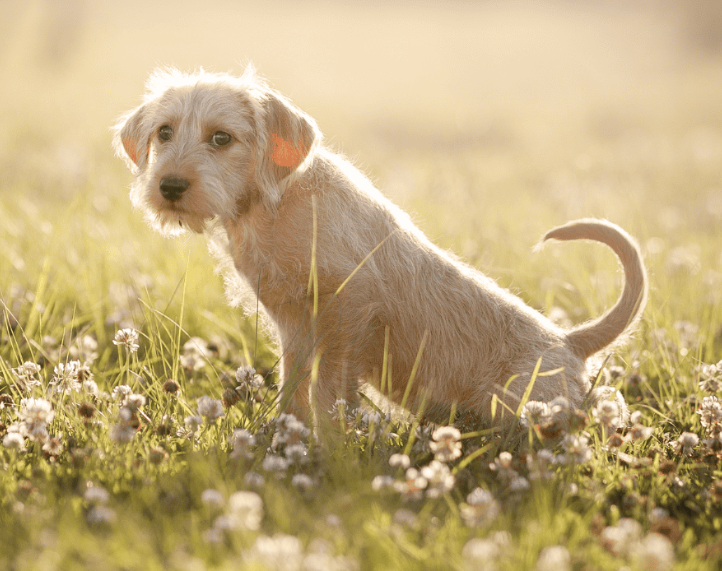
One of the first things you are going to want to achieve when you get your young puppy, is teach him not to pee and poo in your home.
There we go, that typical phrase “NOT TO.” What we really should be thinking is - How do we teach the puppy to do his business somewhere we want him to, rather than not?
If a puppy has been bred in a sanitary environment from the start ie. not a puppy farm, he is likely to have already developed the clean habit of not wanting to soil his resting and feeding area.
So, bear that in mind when you bring your puppy to your home. If you create a space for your puppy where he can rest, eat and drink, he is likely to try his best to not soil there. And if you keep him in this space whilst he rests, but take him out to an area where you want him to toilet at regular intervals, you are on your way to successful toilet training.
But, if you let him loose to have free-run of a large area indoors (allowing him a distance from his resting and feeding area) and unsupervised, he is likely to do his business inside, because he hasn’t yet learnt where exactly he should go.
He needs your fore-thought and guidance. The more times he is taken to the correct place and does his business there, the sooner it will become a habit. Timing plays a key part in toilet training.
HOW OFTEN DOES A PUPPY NEED TO TOILET?
In short – frequently. If he comes to you at 8 weeks old, he comes with a small bladder, little bladder control and a short digestive tract that is being fed 3 or 4 times a day. So, to begin with, he will be peeing at least every couple of hours during the day and pooing as many times as he is eating, if not more.
The good thing is, he should be doing a lot a sleeping too, about 16-18 hours a day. That means he will be awake about 6-8 hours a day, in one to two hour stretches. It’s during these awake times that he is going to need to toilet. So, if you are on hand at those times to take him to where you want him to go, you are going to have less accidents in the wrong places.
There are times in the day when he is more likely to need to go. These are when he has just woken up, after he has had a meal and drink, and after some fun and activity. These are the times to take him to the place you want him to toilet. You might need to pick him up and carry him, to ensure he doesn’t do it on the way.
If he is sleeping through the night, there is no need to wake him up to take him to toilet. But if you hear that he has woken up, it might be because he needs to relieve himself. In which case, take him to the place you want him to toilet, wait for him to go, then put him back to his bed.
As he gets older, and is physically maturing, he will be able to ‘hold-on’ longer, not need to go so frequently. But remember the typical times, note his patterns of behaviour and watch for the signs that indicate he is about to go – this tends to be sniffing the ground and circling before pooing.
REWARD DON’T PUNISH
When your puppy toilets in the correct place, congratulate him and give him lots of praise. This will encourage him even more to toilet there again.
If he does it in the wrong place, its either because he didn’t know, couldn’t wait or he couldn’t get to the right place. He is not doing it wilfully, so he does not deserve to be chastised.
But what you could do, if you see he is about to toilet in the wrong place, is quickly interrupt him by saying something like – “no” or “ah-agh” and quickly take him to the correct place and encourage him to do it there. What can happen though is that the interruption can momentarily halt the need, and he won’t go immediately. You might need to engage him in sniffing around and wait patiently for the need to occur again.
TOILETING ON CUE
It is possible to train your dog to toilet on cue. The way to do this is pair a chosen cue word at the time he is toileting. Over a period of time and repetitions, he will learn to associate the cue word with the action. Once he has learnt that, you will be able to prompt him when you are taking him to the place you want him to go, at a time when he is likely to need to.
HOW LONG DOES IT TAKE A PUPPY TO BE TOILET TRAINED
This tends to depend on how consistently successful the training has been. I would expect that with consistent training, a dog should be completely toilet trained by the time he is 5 months old. Sooner if the trainer has been really diligent. However, they can still have accidents.
My experience is that puppies are quicker to be clean about not pooing indoors. But not peeing can take a little longer. This might be because they need to pee more times in a day than poo, so there is a greater chance of pee accidents. Also, a puppy has less bladder control with immaturity, and it just lets go when the puppy gets excited.
A regular and healthy diet and digestive tract will also affect toileting behaviour. If a dog is on a poor quality diet, that is not well digested, he will eliminate more. Therefore, diet is an important consideration.
Urination can increase when your puppy reaches sexual maturity - a bitch in season will urinate more, and a dog going through a surge of testosterone may be inclined to mark.
If the dog is unable to control his bladder and bowels, he could be unwell and it is therefore important to speak to your vet.


Comments